Source Bulk Vending Capsule Toys for Gifts, Sports, and Souvenirs
Compare 24 bulk vending capsule toys suitable for gashapon machines and bulk toy vending industries. Buyers can review specifications, certifications, and pricing for models ranging from 28mm to 100mm capsules with EN71 and ASTM standards.
Key considerations
Products List


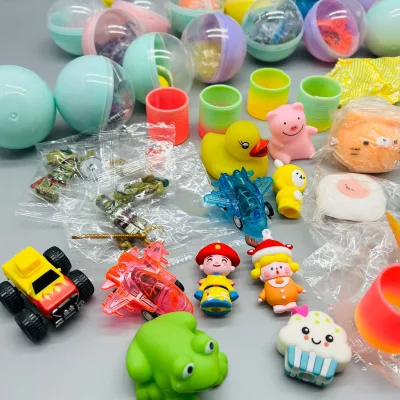


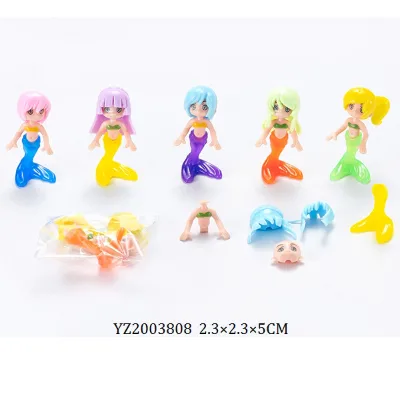


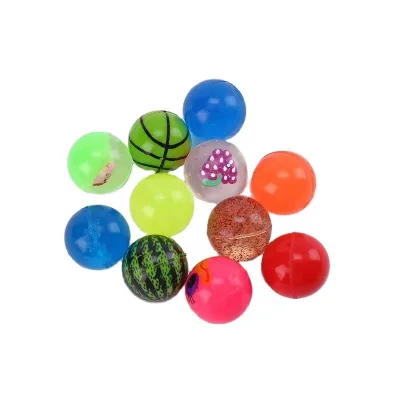


Comprehensive Sourcing Guide
Strategic Sourcing Guide for Bulk Vending Capsule Toys
The global market for bulk vending capsule toys represents a dynamic segment within the broader toy and novelty industry, driven by the enduring popularity of gashapon machines, prize vending units, and interactive retail displays. For procurement professionals, sourcing these items requires a nuanced understanding of technical compatibility, regulatory compliance, and supply chain logistics. The following guide synthesizes available product data and industry standards to provide a disciplined framework for evaluating suppliers and selecting products that meet specific operational needs.
Technical Specifications and Capsule Compatibility
The most critical technical parameter in sourcing bulk vending capsules is the precise fit between the toy and the dispensing mechanism. Incompatibility leads to jamming, product waste, and customer dissatisfaction. The supplied product data indicates a diverse range of capsule sizes, ranging from small 28mm units to large 100mm containers. Specific models are engineered for distinct size brackets, such as the C2194 and C2198 models designed for capsules between 48mm and 56mm, while other variants accommodate the 28mm to 35mm range or the larger 90mm to 100mm spectrum.
Buyers must verify that the selected toy's dimensions align with the "Suitable Capsule Size" specifications provided by the manufacturer. The data highlights specific model numbers like 290+, 30+, 500+, and 167+, each associated with distinct packaging and size constraints. For instance, a product labeled with a single package size of 6.5x6.5x6.5 cm corresponds to a 65mm capsule toy, a standard size in many international vending networks.
Furthermore, the physical construction of the capsule is vital. The material is consistently identified as plastic, which offers durability and cost-efficiency. However, the specific density and wall thickness are not explicitly defined in the general data, necessitating a request for technical drawings or physical samples. The "Touch Screen" attribute observed in some listings suggests that certain products may integrate electronic components, requiring careful consideration of battery life and waterproofing if the capsule is intended for use in outdoor or high-moisture environments.
| Model Reference | Suitable Capsule Size Range | Typical Packaging Density |
|---|---|---|
| C2194 / C2198 | 48mm - 56mm | 100 PCS/Bag |
| 290+ Series | 90mm - 100mm | 250 PCS/Bag |
| 30+ Series | 28mm - 35mm | 50 PCS/Bag |
| 167+ Series | Variable (Large) | 500 PCS/Bag |
| QC516 | 65mm | 1 Bag (Single Item) |
Compliance and Certification Verification
Navigating the regulatory landscape is essential for importing toys into major markets such as the European Union and the United States. The provided data explicitly references compliance with EN71 and ASTM standards. EN71 is the comprehensive European standard for toy safety, covering mechanical, physical, flammability, and chemical properties. ASTM refers to the American Society for Testing and Materials standards, specifically ASTM F963, which is the mandatory safety standard for toys in the US.
Buyers should treat these certifications as baseline requirements rather than optional features. The data notes that some products carry an "ENASTM" certification tag, implying dual compliance. However, procurement teams must verify that the specific batch being ordered carries valid, up-to-date test reports from accredited laboratories. Relying solely on the product listing description is insufficient; a valid certificate of compliance (CoC) must be requested for every shipment.
Additionally, the data mentions "Custom Warning Label: Optional" and "Optional Without Surcharge." This indicates that regulatory labeling requirements can be customized. For markets with strict language requirements (e.g., French in Canada, German in Germany), buyers should confirm that the supplier can apply localized warning labels without incurring hidden surcharges. The "Reach" certification is mentioned in low-confidence background data and should not be assumed; buyers must explicitly ask for REACH compliance documentation if the product is destined for the EU, as this is a separate chemical regulation from EN71.
Cost Drivers and Pricing Structures
The pricing for bulk vending capsules exhibits significant variance, with observed ranges extending from $0.01 to $1,700. This wide spectrum reflects differences in product complexity, material quality, order volume, and customization levels. The lower end of the price range typically corresponds to simple, non-customized plastic capsules in standard sizes, while the higher end may include complex electronic toys, large-scale custom molds, or bulk orders with specific branding.
Several factors influence the final landed cost. The "Customization: Available" attribute suggests that OEM/ODM services are highly welcomed, which inherently adds to the unit cost due to mold fees and setup time. Buyers should anticipate that "Custom Warning Label" or "Shrink Wrapping" options, even if marked as optional, may carry surcharges that impact the total budget.
Minimum Order Quantity (MOQ) is another critical cost driver. The observed MOQ range spans from 1 to 100,000 units. A specific listing indicates an MOQ of 1,000 pieces for certain models. For buyers testing the market, the ability to order small quantities (e.g., 100 or 500 units) is crucial, though the unit price will likely be higher. Conversely, purchasing at the upper end of the MOQ range (e.g., 10,000+ units) typically yields significant economies of scale. The "Sample time" of 3-5 days allows for rapid prototyping, but buyers must factor in the cost of these samples against the potential savings of a larger production run.
Typical Applications and Market Segmentation
Bulk vending capsule toys serve a variety of commercial and recreational applications. The primary applicability is listed as the "Bulk Vending Industry" and "Bulk Toy Vending Machines," which includes classic coin-operated gashapon machines found in arcades, shopping malls, and entertainment centers. The data also highlights "Funny," "Particular," "Odd," and "Intellectual" toys, indicating a diverse product mix that caters to different consumer psychographics.
The target demographic is broad, with age ranges specified as "5 to 7 years," "8 to 13 Years," and "14 Years & up," alongside a general "6 Ages+" designation. This suggests that the product line is designed to be inclusive, offering options for toddlers, children, and even adults seeking novelty items. The "Gender: Unisex" attribute further reinforces the mass-market appeal, making these products suitable for general retail environments rather than niche gender-specific stores.
Beyond traditional vending machines, the "Use: Gashapon Machines" and "Wonderful Gift" attributes suggest secondary applications in party favors, corporate giveaways, and souvenir shops. The "Sports" and "Recreation" usage tags indicate that some capsules may contain sports-themed novelties or items designed for active play. Procurement strategies should align the product selection with the specific venue; for example, intellectual toys may perform better in educational centers, while "funny" or "odd" toys may drive higher engagement in high-traffic retail locations.
Supplier Evaluation and Operational Capabilities
When evaluating potential suppliers, buyers must look beyond the product listing and assess the operational infrastructure. The "Place of Origin" is consistently identified as China, with specific mentions of Henan as a production hub. While this provides a geographical baseline, it does not guarantee quality or reliability. Buyers should verify the supplier's capacity to handle the required volume, given the wide MOQ range observed.
The "Delivery time" of 5-10 days is a standard metric for production lead times, but this should be distinguished from shipping time. For large orders, the total lead time will include production, quality control, and logistics. The "Sample time" of 3-5 days is a positive indicator of a responsive supply chain, suggesting that the supplier can quickly validate product specifications before full-scale production begins.
Payment terms are another area of scrutiny. The data lists "Trade Assurance," "Paypal," "TT," and "Western Union" as accepted methods. Trade Assurance is particularly valuable for international buyers as it offers a layer of protection against non-delivery or quality disputes. However, for large transactions, Telegraphic Transfer (TT) with a deposit structure is common. Buyers should ensure that the payment terms align with their internal financial policies and risk tolerance.
Quality Control and Packaging Standards
Quality control in the capsule toy industry is paramount to prevent mechanical failures in vending machines. The "Standard" attribute lists EN71 and ASTM, which serve as the foundation for safety and durability. However, buyers should also inspect the physical packaging standards. The data specifies various packing configurations, such as "100PCS/Bag, 10bags/Carton" or "250PCS/Bag, 4bags/Carton."
Consistent packaging is essential for automated filling lines and manual sorting. Inconsistent bag counts or carton dimensions can lead to logistical inefficiencies. The "Single gross weight" of 0.05 kg provides a baseline for shipping calculations, but buyers must verify if this weight includes the packaging material or just the product. For international shipping, the "Single package size" of 6.5x6.5x6.5 cm is a critical metric for calculating container utilization and freight costs.
Furthermore, the "Shrink Wrapping: Optional with Surcharge" attribute indicates that some suppliers offer enhanced protection against dust and moisture. For buyers operating in humid climates or long-term storage scenarios, investing in shrink-wrapped packaging may reduce product degradation and return rates. The "Custom Warning Label" option also plays a role in quality assurance, ensuring that the final product meets the regulatory requirements of the destination market without the need for post-import relabeling.
Long-Term Procurement Considerations
Sourcing bulk vending capsules is not merely a transactional activity but a strategic partnership that impacts long-term business viability. The "OEM/ODM: Highly Welcomed" attribute suggests that suppliers are open to developing exclusive designs. For buyers looking to differentiate their vending machines from competitors, investing in custom molds and unique designs can create a competitive advantage. However, this requires a commitment to higher MOQs and longer lead times.
Sustainability is an emerging consideration in the toy industry. While the primary material is identified as plastic, buyers should inquire about the type of plastic used (e.g., ABS, PP) and whether the supplier offers recycled material options. Although not explicitly stated in the provided data, this is a growing expectation in the B2B market.
Finally, the "Color: 04" and "Colors: Mulit-color" attributes indicate a variety of aesthetic options. Maintaining a consistent color palette across different product lines can strengthen brand identity. Buyers should establish a color management protocol with their supplier to ensure that "Mulit-color" batches remain consistent across different production runs. By focusing on these long-term factors—customization, sustainability, and brand consistency—procurement professionals can build a resilient supply chain that adapts to market trends and consumer preferences.
FAQs
What certifications do bulk vending capsule toys meet?
These toys meet EN71 and ASTM safety standards. Some listings explicitly show ENASTM certification tags, indicating dual compliance for European and American markets, though buyers must verify specific batch test reports.
Which capsule sizes are compatible with these toys?
Compatible sizes range from 28mm to 100mm depending on the model. Specific models fit brackets like 28mm-35mm, 48mm-56mm, or 90mm-100mm, so buyers must match the toy model to their machine's capsule dimensions.
Can I customize warning labels on these products?
Custom warning labels are available as an optional feature. Some suppliers offer this service without a surcharge, allowing buyers to meet specific destination market language requirements without incurring extra costs.
What is the typical minimum order quantity for these toys?
The minimum order quantity ranges from 1 to 100,000 units depending on the supplier. Specific listings indicate an MOQ of 1,000 pieces for certain models, while others allow smaller trial orders.
How long does it take to receive samples?
Sample time is typically 3 to 5 days. This rapid turnaround allows buyers to validate product specifications and quality before committing to larger production runs or bulk orders.
What materials are used to make these capsule toys?
The primary material used is plastic. This material offers durability and cost-efficiency suitable for bulk vending applications, though specific plastic types like ABS or PP are not detailed in general listings.